
MineralTech • AgTech • Climate R&D
Building a science-led mineral materials platform for agriculture and industry.
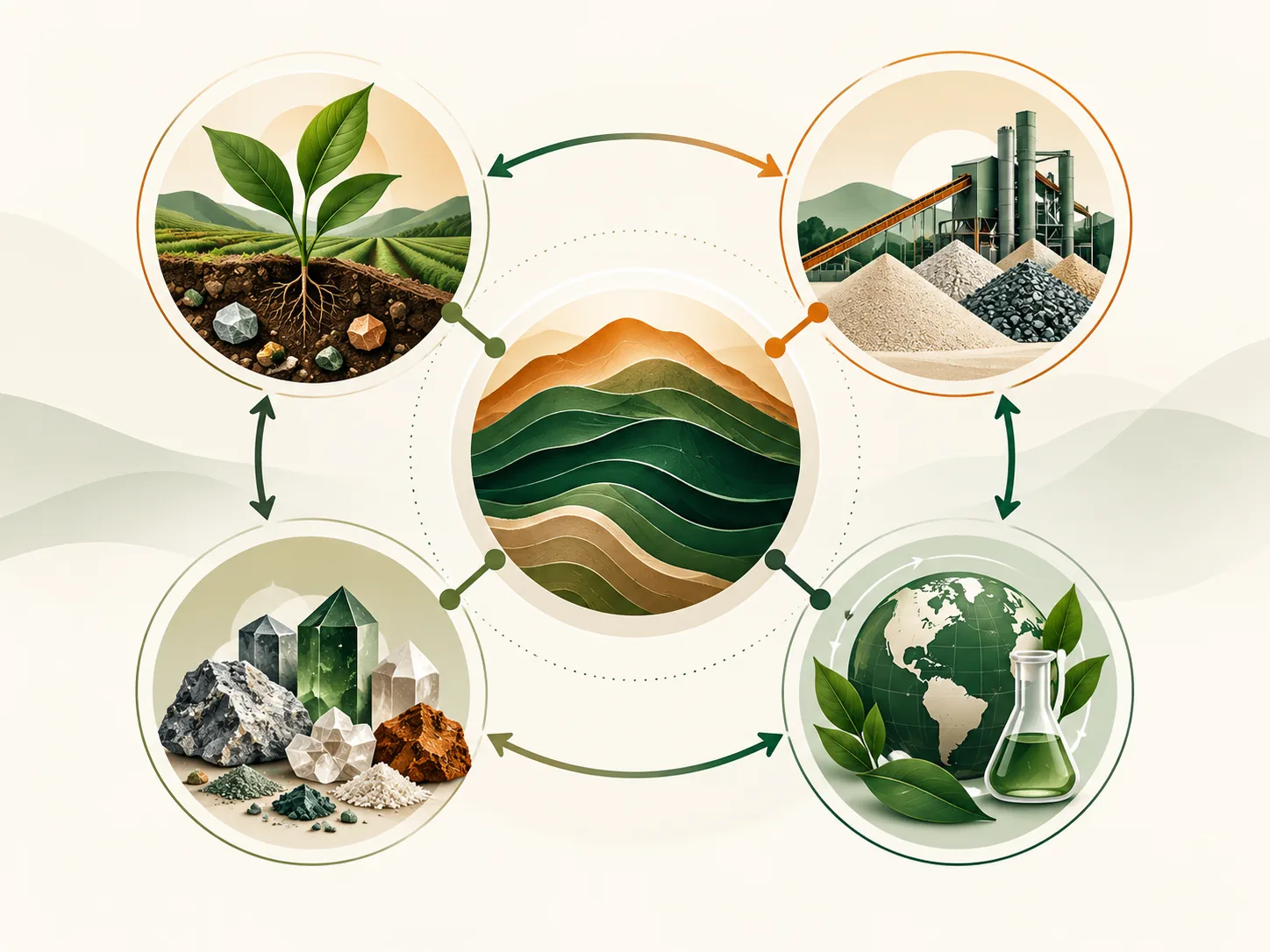
GAIA LITHOS is a Brazilian early-stage materials startup using geoscience, physical separation and applied R&D to develop K-Mg mineral inputs, industrial mineral streams and strategic co-product pathways from a syenitic system.
Current Raise
US$400k pre-seed to turn geological potential into validated products
The current round is designed to advance the first stage of a 24-month de-risking program: characterize the feedstock, test separation routes, measure product behavior and build the evidence required for the next capital decision.
The current raise is intended to advance the program, not to finance mine construction. Follow-on capital decisions depend on measured technical results.
Dedicated feedstock for repeatable learning
A defined syenitic system provides the physical basis to connect geological variability with processing behavior and product specifications.
Several paths, independently validated
K-Mg, feldspathic, strategic co-product and climate-R&D hypotheses can advance, change or stop independently as evidence is generated.
Stage gates before scale
Capital is deployed to answer technical questions first. Larger exploration, pilot and scale-up decisions only follow if the evidence warrants them.
The project mineral-rights portfolio is currently undergoing corporate reorganization into GAIA LITHOS, subject to applicable ANM procedures.
Technology Stack
From geological intelligence to validated materials
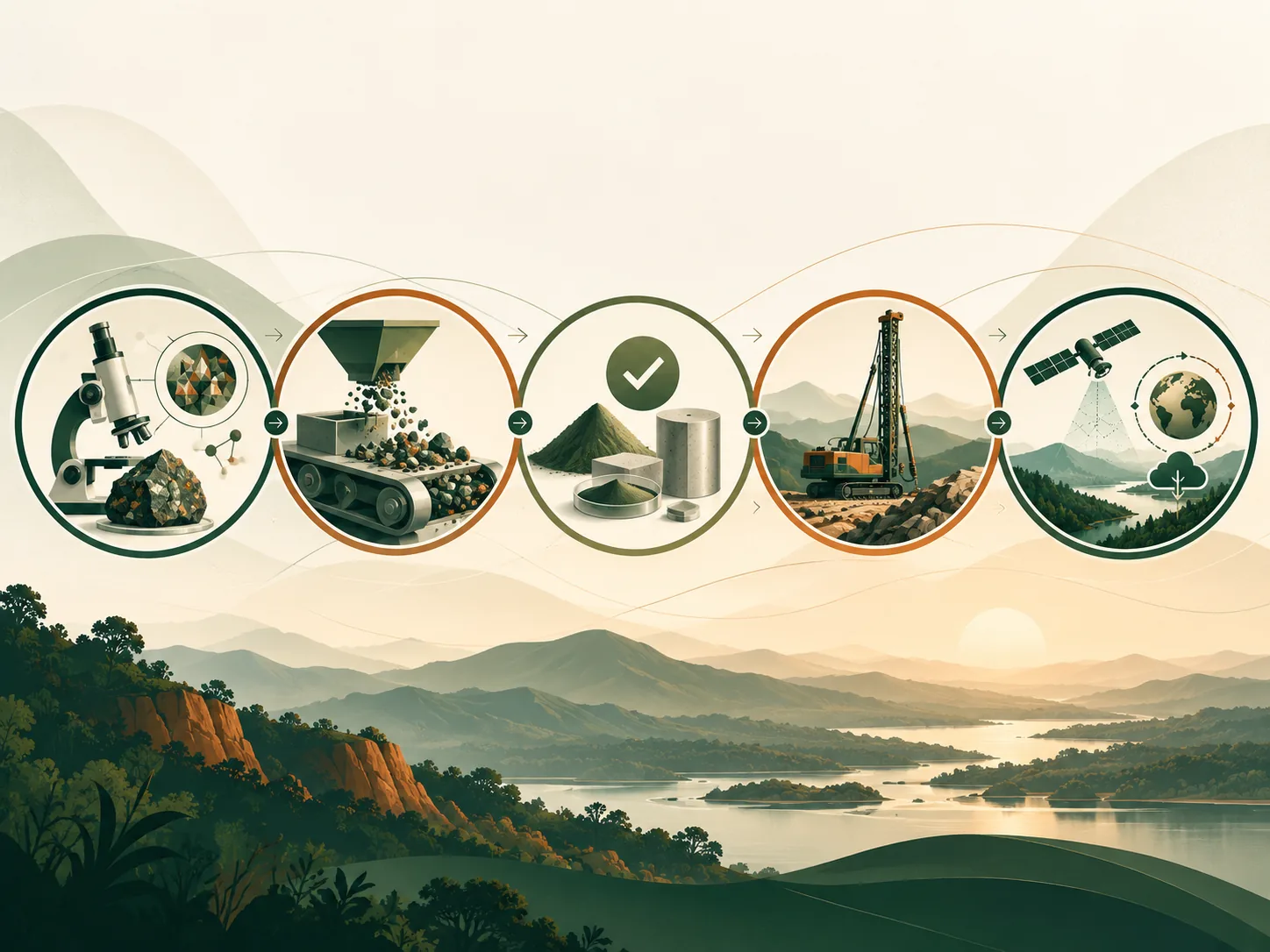
GAIA combines geoscience, physical separation, product science and applied R&D in one development stack. The objective is to turn geological variability into repeatable data, specifications and decision-ready product evidence.
Geological intelligence
Mapping, geochemistry, geophysics, 3D interpretation, geostatistics, GIS and Python-based workflows for domains, variability and target generation.
Physical separation
Characterization, comminution, magnetic and gravity separation, liberation studies and mass balance to define repeatable mineral streams.
Qualification by measurement
Industrial-mineral specifications, K-Mg release behavior, ceramic tests, agronomic response and quality thresholds before scale-up.
Applied validation
Mineral–soil interaction, enhanced rock weathering geochemistry, carbon accounting, MRV development and uncertainty analysis.
How Value Is Built
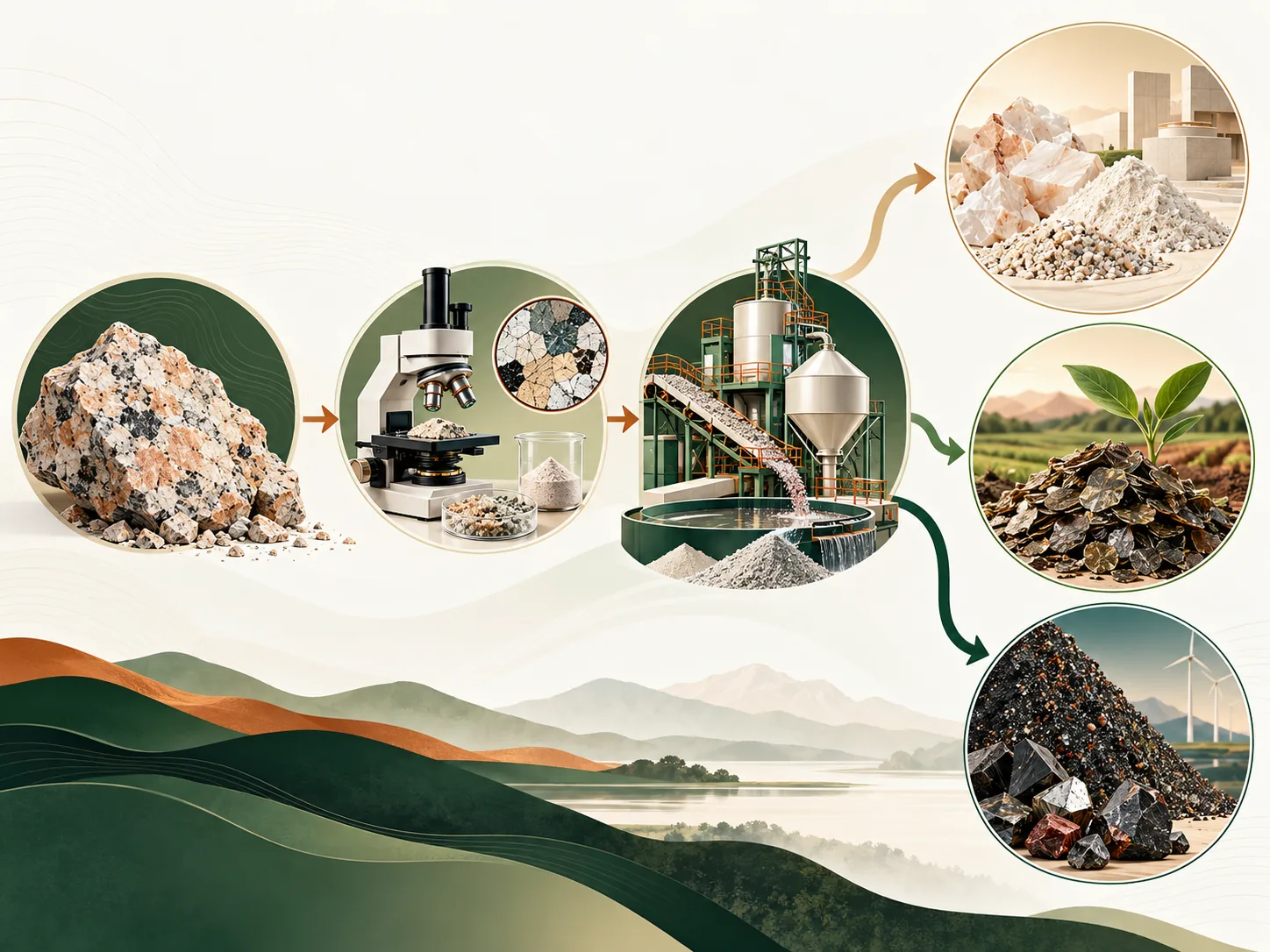
One feedstock, multiple independently tested product pathways
The venture is structured for optionality: several product hypotheses share the same geological base, but each must pass its own technical and market gates.
What Exists Today
A real geological base before product claims
Caboclo and Nova Olinda provide the geological starting point for the venture. Historical mineralogy and geochemistry support the initial hypotheses, while the current program is designed to independently validate what can become a product.
Caboclo Syenite
Historical mineralogy
- Quartz ~11%
- K-feldspar ~50%
- Biotite ~23–30%
Nova Olinda Syenite
Historical mineralogy
- Quartz ~5–7%
- K-feldspar ~43–48%
- Biotite ~25–35%
Historical Whole-Rock Geochemistry
What the Round Unlocks
A stage-gated path from mineral thesis to product evidence
The current pre-seed round advances the early stages of this roadmap. Later work and follow-on capital depend on the results generated at each gate.
Geology + mineralogy
Define geological domains, variability, mineral hosts and liberation parameters.
Recovery + mass balance
Test physical separation, measure recoveries and select, adjust or abandon processing routes.
Product + use testing
Test ceramic specifications, K-Mg release, agronomic response and heavy-mineral characteristics.
Market + independent review
Gather buyer/specification feedback, integrate results and complete an independent technical review.
Next-stage decision
Decide which routes advance to pilot work, further exploration, reformulation or discontinuation.
Product Opportunities
Four product hypotheses — none assumed to win
The platform creates optionality without pretending every stream will succeed. Each product hypothesis has specific technical, regulatory and market evidence requirements.
K-Mg mineral inputs
Proof requires chemistry, recovery, K/Mg release, soil and plant response, dose definition and a viable regulatory pathway.
Feldspar + quartz
Proof requires residual iron, alkali balance, whiteness, particle size, firing tests and buyer specification feedback.
Strategic co-products
Proof requires abundance, liberation, REE-hosting phases, recovery, radiological characterization and evidence of market relevance.
Climate R&D / ERW
Proof requires weathering behavior, geochemical response, carbon accounting and MRV. Carbon-removal performance has not yet been validated.
Founder
Founder–market fit across field geology, computation and mineral-project evaluation
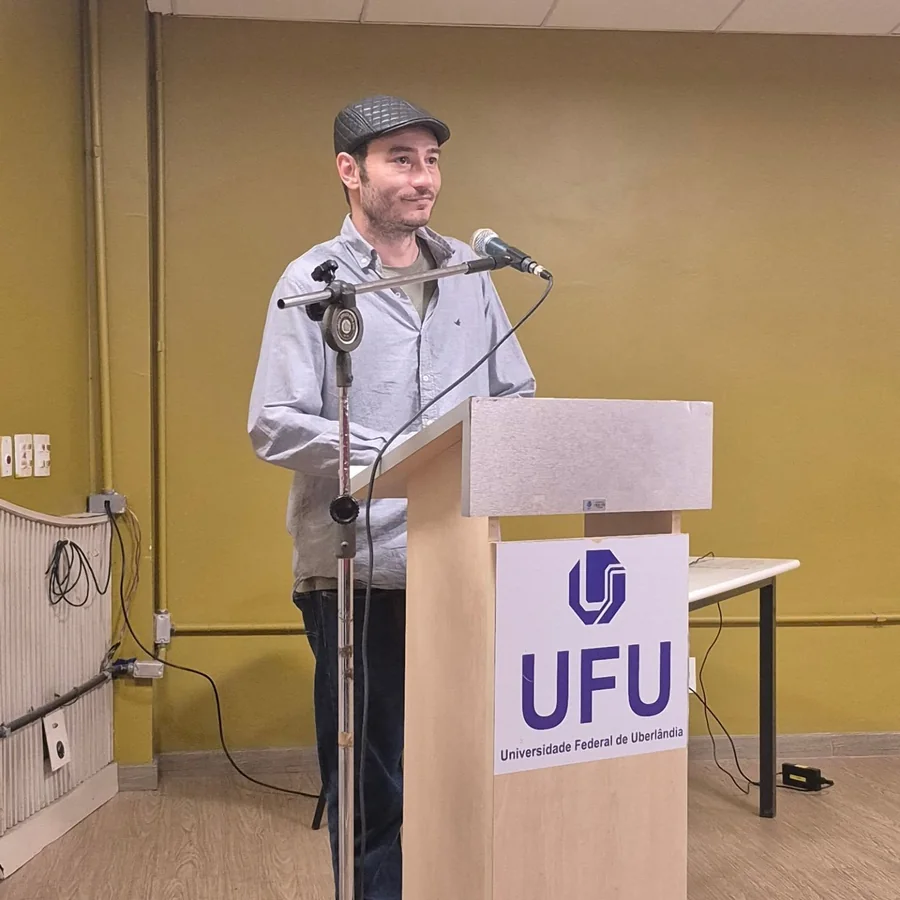
Founder & CEO | Geologist
Neymer Guimarães
Brazilian geologist with experience in mineral exploration, geological mapping, structural interpretation, geoscientific data integration, 3D geophysical inversion, geostatistics and field campaigns. His work combines field geology with GIS, Python and data-driven workflows for target generation, geological interpretation and technical decision-making.
His work has included an India-focused potassium and phosphate supply-security initiative and technical screening of mineral opportunities for international traders and investment-oriented counterparties, reviewing geological quality, exploration maturity, data reliability, processing requirements and technical risk.
Python • QGIS • SAGA GIS • GRASS GIS • SQL • SimPEG • 3D Magnetic Inversion • Geostatistics • QA/QC • Target Generation
Pre-Seed • Investors • Strategic Partners
Turn a mineral thesis into measurable product evidence
GAIA LITHOS is currently raising US$400k to advance the first stage of its evidence-generation program. The goal is to convert mineral potential into validated product specifications, repeatable processing data and a clear basis for the next capital decision.
Belo Horizonte, Minas Gerais – Brazil
Project: Afrânio, Pernambuco – Brazil